
The Watcher
How we mean what we make.

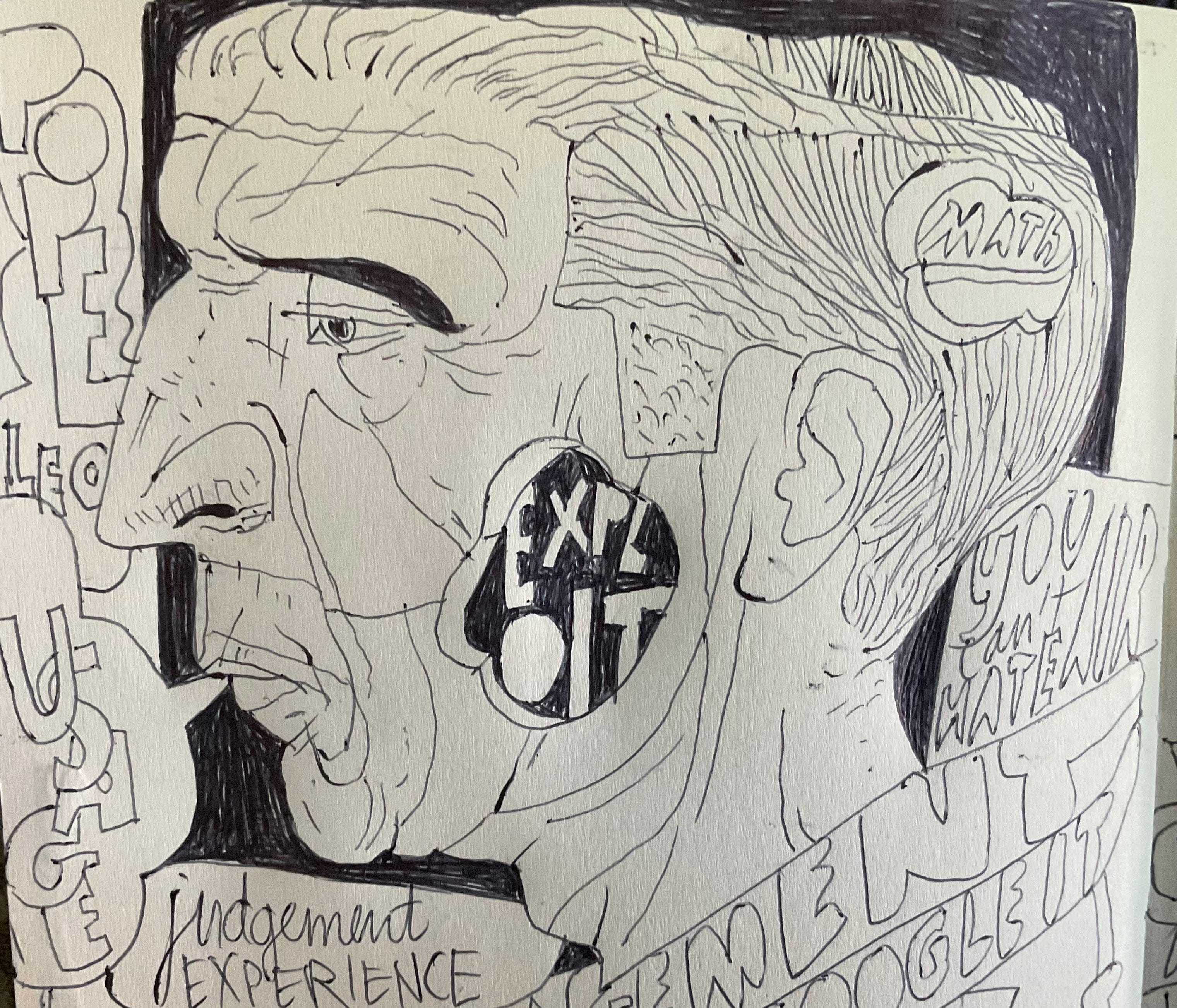
My students graduated today and as our faculty is a design and art faculty much of the speechifying was about creativity and the challenging times we live in. I was one of 3 faculty that taught the grad group in their 2nd year drawing class. It was their drawings that I could conjure, as the automated voice reader called out names and they crossed the stage —- it was their drawings that were vivid in my thoughts.
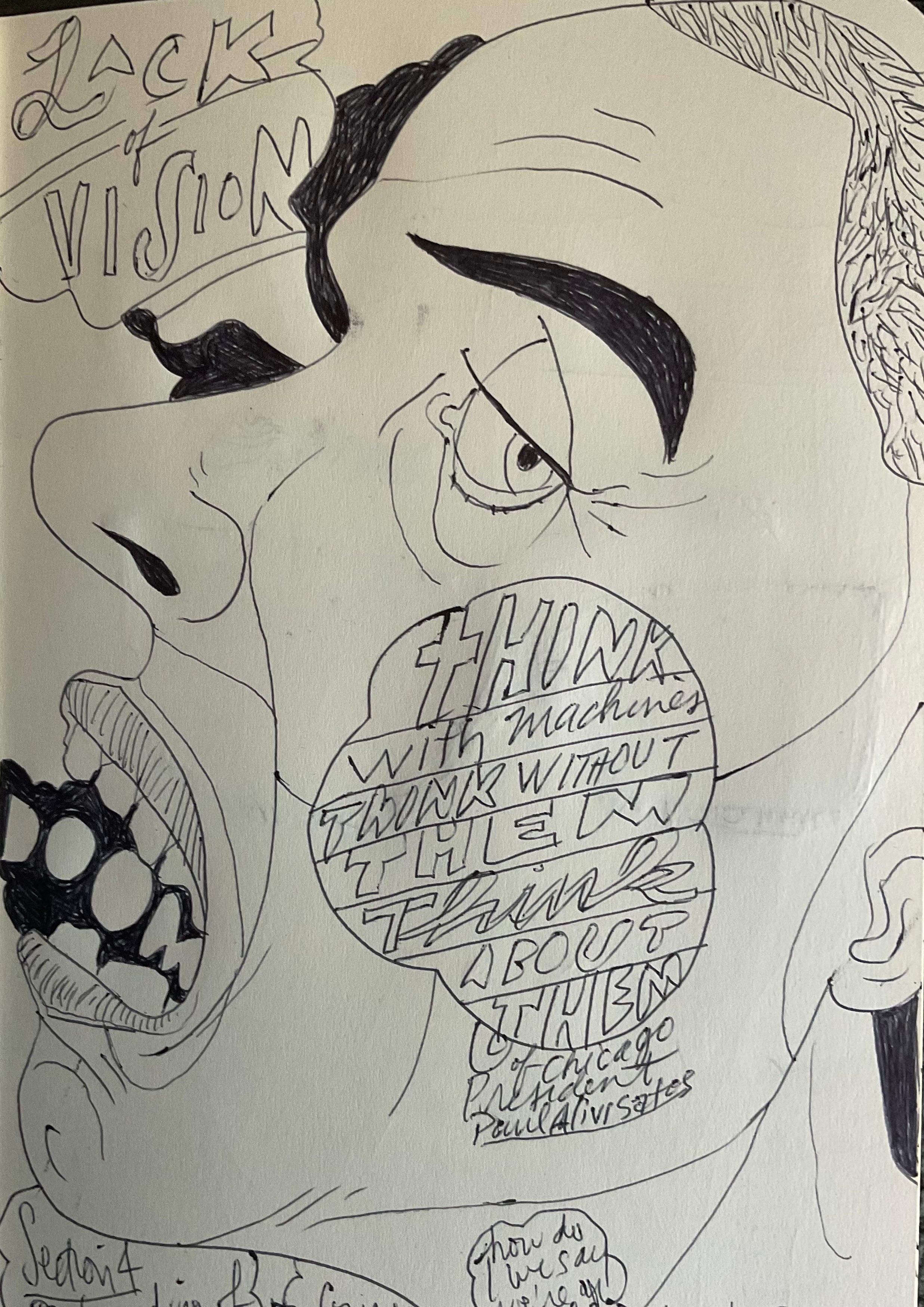
I have worked with amazing artists over the years and I remember their strengths and their challenges in their drawing. When I returned from Convocation, during halftime of the Mexico/South Africa soccer match, I was scrolling Substack and a passage from the writer George Saunders’ A Swim in a Pond in the Rain, a book summarizing his creative writing course at Syracuse University was shared by the Artificial Whimsy Substack. The post was about reading and based on a NYTimes poll, “Who’s a Better Writer: A.I. or Humans?” how completely messed up is our cultural life that we even have to ask. The Saunders excerpt seemed to explain why my students drawings are my clearest memory of them …
To study the way we read is to study the way the mind works: the way it evaluates a statement for truth, the way it behaves in relation to another mind (i.e., the writer’s) across space and time...Why would we want to do this? Well, the part of the mind that reads a story is also the part that reads the world; it can deceive us, but it can also be trained to accuracy; it can fall into disuse and make us more susceptible to lazy, violent, materialistic forces, but it can also be urged back to life, transforming us into more active, curious, alert readers of reality.
If we replace writing for drawing, I recognize my teaching process in the drawing studio. Saunders is arguing for reading how we read as a meaningful approach to writing. The parallels shouldn’t be surprising, and I have described before that I don’t teach how to draw, but how to learn to draw. I see the study of my students practice of drawing as a window into their thinking, their experiences, and their influences. What gives drawing a possibly deeper insight into a students thinking is how the act of drawing offers 2 paths of feedback, the physical engagement of the process and the resulting expression on paper.
In writing, there is the abstraction of words and language, and then the arraying of this abstract layer to describe reality. Images are also an abstraction, but the resemblance to the real, and the physical/performative expression of drawing through materials adds a rich physical/sensory engagement with reality. This is why I argue that lashing image generation to LLMs, no matter how vivid the result, the absence of the actual hand and body in the generated output is a fatal flaw.
When I’m observing my students draw in studio, I’m not measuring the skill of their repetitive action of markmaking. My role is not to correct or make their hands more expert. I do question their reasons and decisions and sometimes you can see a hand that has spent too much time tightly gripping a digital pen. But my task is to offer them the freedom to loosen their grip, to challenge them to find their own way to making marks. Forcing a technique in drawing to get a consistent result is a misplaced focus on a product that is similar to AI outputs and high school students copying from photographs, neither of these are drawing. Drawing is engaging with reality and trying to communicate your relationship to it in such a way that we see the world in a new way. Art should transport us, it should be a vehicle that moves us, but before we can push the gas pedal we need to make the vehicle.
The studio is the garage where my students build the vehicle that will carry their ideas and make images that will move us. It isn’t the output, the sleek showroom, gleaming latest model of AI generated images that will drive the future, because it removes the essential engine that makes the image mean anything. Without the voice of a person, I believe a critical part of the image has been silenced. AI begins with the road travelled, torn up behind each of our steps, and then the repaved past is generated in front of us like a flattened gravel road of cultural history. This is the future?
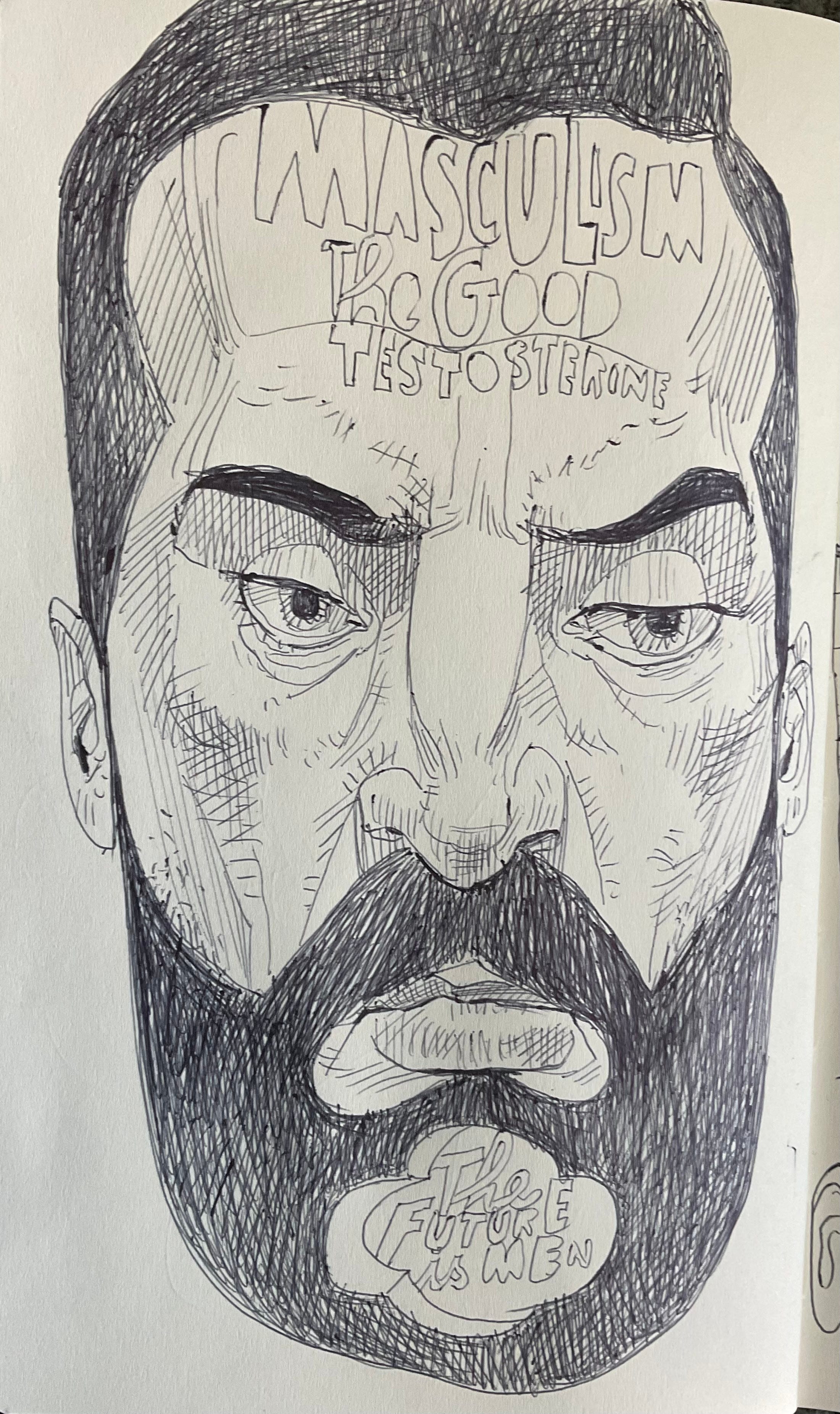
Celebrate the crayon and the sidewalk chalk. I can see in the hands of my students, kids that were lucky to have found themselves in the making of marks and pictures. The incredible joy and freedom of making pictures that invite us to see the world through another’s eyes. Drawing that isn’t about accuracy or talent or incredible skill, but honest and personal—-just fully human. Make your mark.
I always stress the way I feel when I draw. It is the most calming, focused and relaxed my brain is. I wish more rehab centers would hand patients a sketchbook on day one.
So what do you think of drawing while listening to people talk about other things. Also. You should read Question 7.